Pompano was incorporated June 6, 1908, and became Pompano Beach on June 16, 1947. Four National Register listings, museums and where to visit them.
Last checked Oct. 10, 2026. History comes from the City of Pompano Beach’s historical timeline, written with the Pompano Beach Historical Society. National Register listings come from the National Park Service’s register data. Museum hours come from Pompano Beach Arts.
Pompano Beach grew up as a farm town beside the railroad before it became a beach city. The Town of Pompano was incorporated in 1908; it took the name Pompano Beach in 1947. Its landmarks include a 1907 lighthouse, a 1916 pioneer home and an archaeological mound site on the National Register.
Who to call
- Pompano Beach Cultural Affairs (Blanche Ely House Museum, Ali Cultural Arts): 954-545-7800; museum line 954-786-7877
- Historic preservation and the historic map: Planning and Zoning, 954-786-4679
- City parks (Founders Park, Indian Mound Park): 954-786-4111
- City cemetery: 954-786-4138
How Pompano began
- Before the railroad: a few pioneer families lived around what is now Lake Santa Barbara. When Henry Flagler’s Florida East Coast Railway pushed south, reaching Palm Beach by 1894 and Miami two years later, they moved inland to be near the tracks, the city’s timeline says.
- The name: railway and canal surveyor Franklin Sheen is credited with naming the settlement after the pompano fish. The most-told version has him eating pompano with a local family and writing the name on his map; the Historical Society says no version is proven, but no other account of the name exists. Timeline.
- 1906: a hurricane hit the settlement two years before incorporation.
- June 6, 1908: 33 residents met at the railway depot and voted to incorporate. John Randolph Mizell became the first mayor. Timeline.
- 1900 to 1920: an estimated 10,000 to 12,000 Bahamians moved to South Florida, many to Pompano, the timeline says. Actress Esther Rolle was born in Pompano on Nov. 8, 1920; in 1981 the City Commission renamed NW 3rd Avenue as Esther Rolle Avenue.
- 1926: a hurricane that came ashore in Miami caused damage as far north as Pompano.
- 1937: businessman William Kester began building several dozen small wood cottages on the west side of A1A.
- June 16, 1947: the Town of Pompano annexed the beach settlement called Pompano Beach, and “Beach” became part of the name. Two hurricanes struck that year.
- 1952: Blanche Ely High School opened. Until then, Black students in Pompano had to travel to Fort Lauderdale, Miami or other towns to finish high school.
National Register of Historic Places
The National Park Service’s register data lists four properties under Pompano Beach:
| Property | Address in NPS data | Type | Listed |
|---|---|---|---|
| Hillsboro Inlet Light Station | Hillsboro Inlet | Structure | 1974 |
| Sample Estate | 3161 N. Dixie Highway | Building | 1984 |
| Sample-McDougald House | 450 NE 10th St. | Building | 2004 |
| Pompano Beach Mound | 1232 SE 13th St. | Site | 2014 |
- Hillsboro Inlet Light: first lit on March 7, 1907, after Congress approved a first-order light in 1901, the city’s timeline says. It stands on the north side of the inlet in the town of Hillsboro Beach, though federal records list it under Pompano Beach.
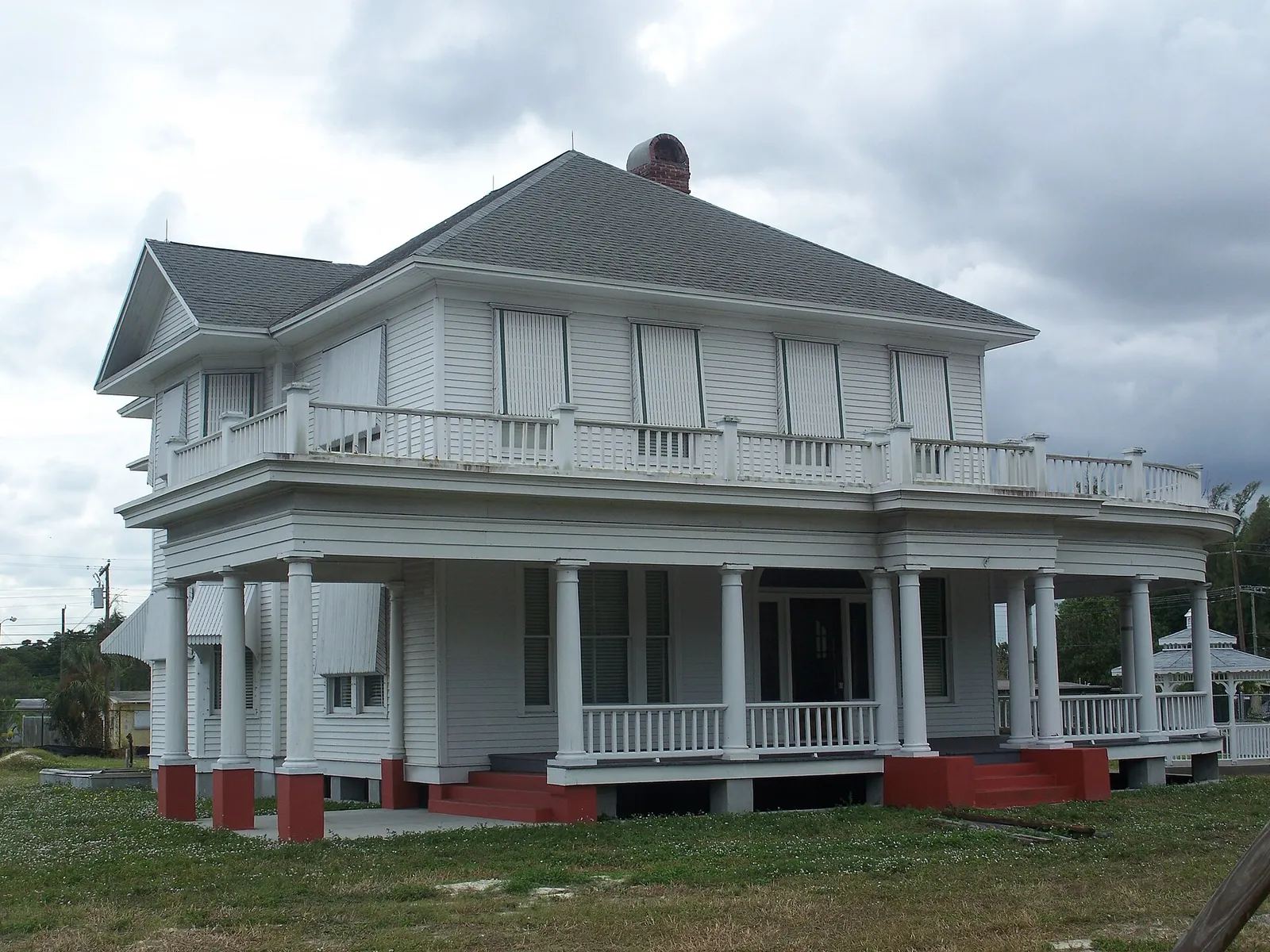
- Sample-McDougald House: built in 1916 for Albert Neal Sample, who bought his brother’s farmland in 1915; the house celebrated its centennial in 2016. The register has two entries tied to Sample and 1916: the Sample Estate at 3161 N. Dixie Highway, listed in 1984, and the Sample-McDougald House at 450 NE 10th St., listed in 2004. Timeline.
- Pompano Beach Mound: an archaeological site, listed in 2014, at Indian Mound Park, which the city’s parks list gives as 1232 Hibiscus Ave.
Museums and places to visit
| Place | Address | Hours |
|---|---|---|
| Blanche Ely House Museum | 1500 NW 6th Ave. | Open during events and by appointment; call 954-545-7800 |
| Historic Ali Cultural Arts | 353 Dr. Martin Luther King Jr. Blvd. | Open during events and by appointment; call 954-545-7800 |
| Founders Park | 306 NE 3rd St. | Sunrise to sunset |
| Indian Mound Park (Pompano Beach Mound) | 1232 Hibiscus Ave. | Sunrise to sunset |
| City cemetery | 400 SE 23rd Ave. | Call 954-786-4138 |
The Blanche Ely House Museum, the former home of educators Blanche and Joseph Ely, reopened in March 2019 under the city’s Cultural Affairs Department and tells the story of Pompano Beach’s Northwest community, its venue page says. Ali Cultural Arts celebrates the history and culture of the city’s African American community. Both are closed on major holidays. Story Time at the Ely House is now held on the fourth Wednesday of each month.
Old Pompano
The city’s Planning and Zoning Department publishes a Historic Old Pompano map (PDF) and has a historic preservation planner, 954-786-4310. Today Old Town, around NE 1st Street and Flagler Avenue, hosts the monthly Old Town Untapped and Backyard Jam events; see our things to do guide.
What this means for you
- The Ely House and Ali center open by appointment; call ahead.
- Founders Park and Indian Mound Park are free and open daily.
- Four National Register listings carry a Pompano Beach address in federal records.
Related: Pompano Beach population and growth, parks and trails and moving to Pompano Beach.
Frequently asked questions
When was Pompano Beach founded?
Settlers lived around today’s Lake Santa Barbara before the Florida East Coast Railway reached the area in the 1890s. Thirty-three residents voted at the railway depot on June 6, 1908, to incorporate the Town of Pompano.
When did Pompano become Pompano Beach?
On June 16, 1947, when the Town of Pompano annexed the beach settlement known as Pompano Beach, according to the Pompano Beach Historical Society.
How did Pompano Beach get its name?
From the pompano fish. The best-known account says surveyor Franklin Sheen ate pompano with a local family and wrote the name on his map; the Historical Society notes no version of the story is proven.
What National Register of Historic Places sites are in Pompano Beach?
The National Park Service lists four under Pompano Beach: the Hillsboro Inlet Light Station, the Sample Estate, the Sample-McDougald House and the Pompano Beach Mound.
Who was the first mayor of Pompano?
John Randolph Mizell, according to the city’s historical timeline, compiled with the Pompano Beach Historical Society.
Have your say